Natalie
Cederquist Levin


Natalie Cederquist Levin
A Mastery Shaped by the Figurative Tradition
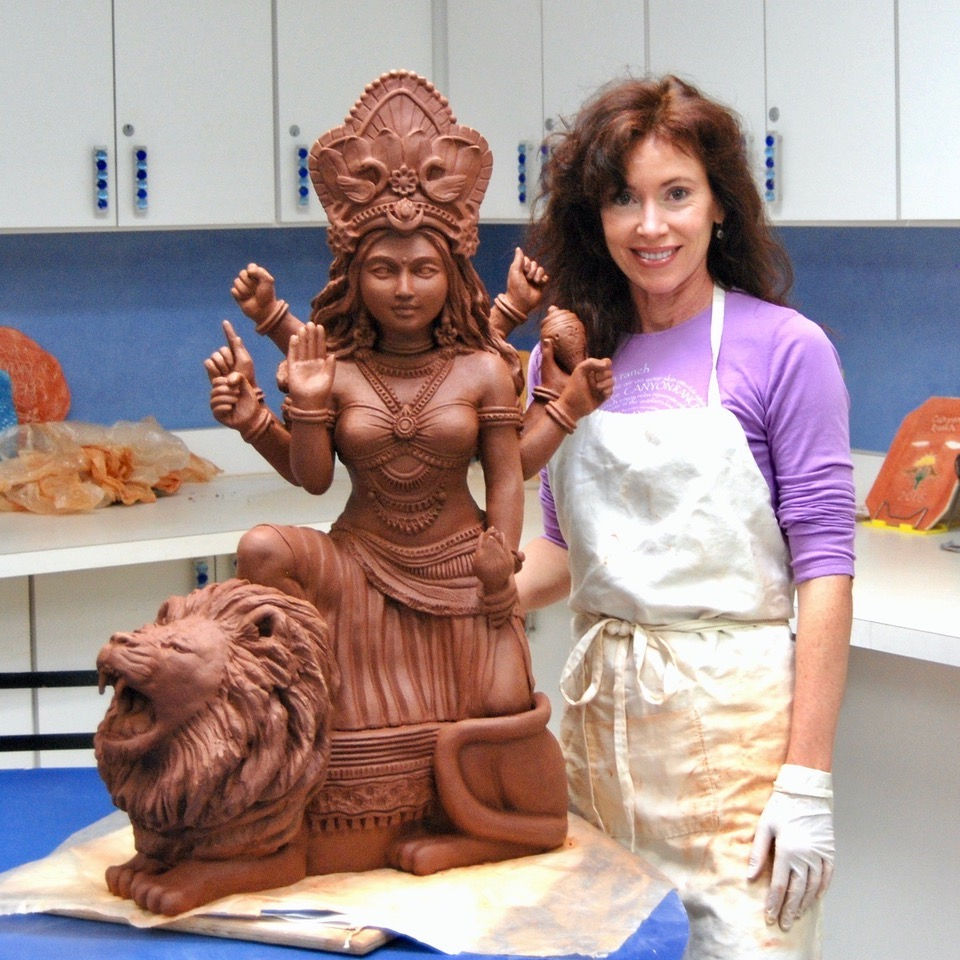
Natalie Cederquist Levin stands in the great tradition of figurative artists whose mastery of form, anatomy, and spirit has shaped the history of art. From her earliest training in life drawing at the age of thirteen, through her studies with celebrated artists Wayne Thiebaud, Robert Arneson, and master sculptor Richard MacDonald, she has pursued the human figure with an intensity and devotion that align her with the greatest draughtsmen across centuries.

Natalie Cederquist Levin at Work

The Artist in Process

Natalie Cederquist Levin at Work
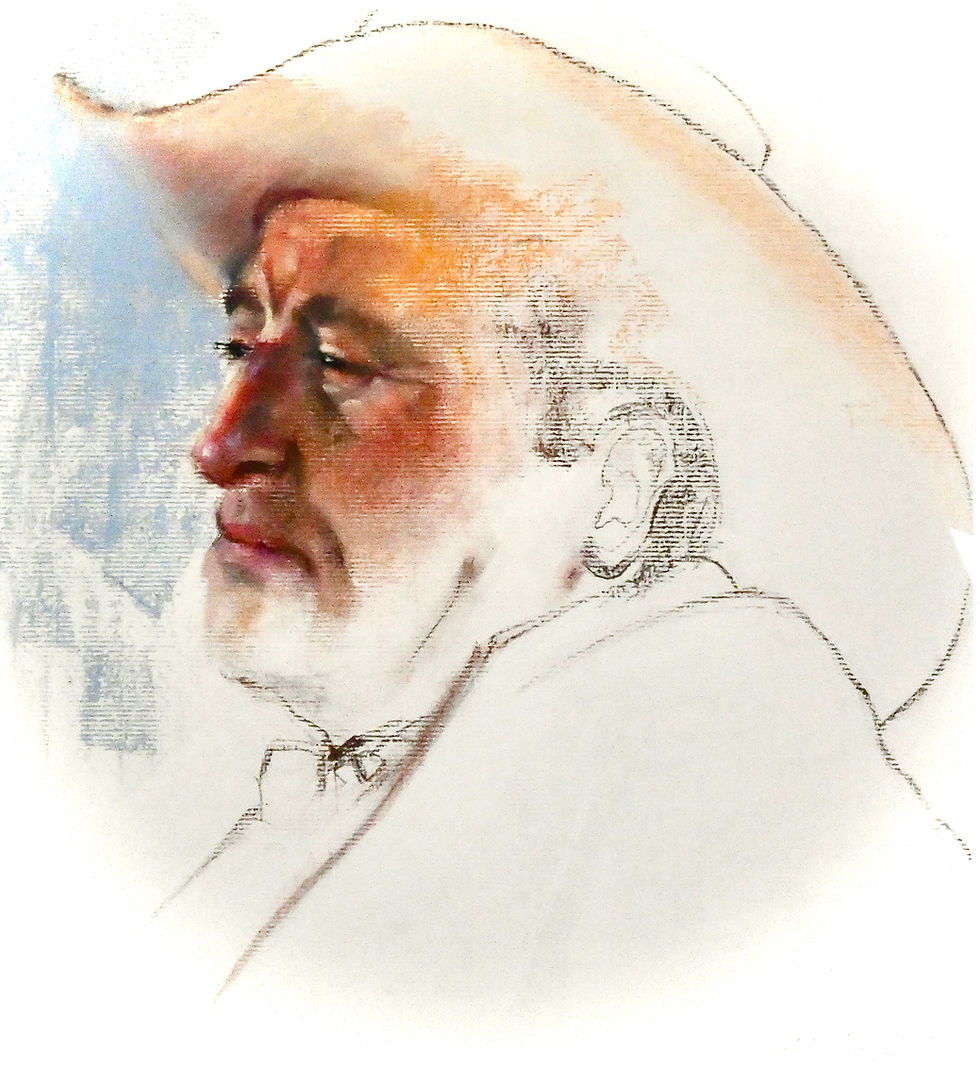
Old Rancher Pastel Portrait
.jpg)
Portrait of Sri Sakthi Amma, Graphite on paper

Lady of the Blue Agave, 4’w x 5‘8”h x 4’d. Weight: 265 lbs, sculpture only

Young Monk. Bronze, 18” w x 18” h x 10” d. Weight: 29 lbs
Her drawings and bronzes demonstrate rigorous technical skill, developed through years of intensive life drawing and figurative study. Yet what sets her apart is the unmistakable mysticism at the heart of her practice.
For Cederquist Levin, the figure is not only a subject of observation but also a vessel of presence, a way of revealing the invisible within the visible. Her art moves beyond likeness to capture the ineffable: essence, spirit, and the felt reality of the soul. Her sculptures and drawings are held in private collections worldwide and honored in spiritual institutions such as Kauai’s Hindu Monastery and Sripuram in India. Collectors and spiritual communities alike recognize in her work not only technical brilliance but also a rare ability to create art that functions as a bridge between the material and the transcendent. Cederquist Levin’s work continues the lineage of classical and modern masters for whom the figure remains the most powerful vehicle for expressing human dignity, emotion, and transcendence. With each work, Natalie Cederquist Levin extends the centuries-long dialogue of figurative art, offering creations that are at once timeless and contemporary, anchored in tradition, suffused with mysticism, and alive with spirit.
Natalie Cederquist Levin:
Offerings
Her sculptures and drawings are held in private collections worldwide and honored in spiritual institutions such as Kauai’s Hindu Monastery and Sripuram in India. Collectors and spiritual communities alike recognize in her work not only technical brilliance but also a rare ability to create art that functions as a bridge between the material and the transcendent. Cederquist Levin’s work continues the lineage of classical and modern masters for whom the figure remains the most powerful vehicle for expressing human dignity, emotion, and transcendence. With each work, Natalie Cederquist Levin extends the centuries-long dialogue of figurative art, offering creations that are at once timeless and contemporary, anchored in tradition, suffused with mysticism, and alive with spirit.
With precision and nuance, Natalie’s drawings reveal the figure as both physical form and vessel of spirit. Each portrait of a spiritual luminary, teacher, or visionary is not only a likeness but also a meditation, capturing presence beyond the visible. Rendered with rare sensitivity, these works embody a mystical depth that makes them both timeless and profoundly personal.
From bespoke bronzes to site-specific installations, Natalie collaborates with collectors, institutions, and spiritual communities to bring unique visions into form. Each commission is created with care, integrity, and devotion.
Natalie’s books bring together her portraiture and sculpture with the words of great spiritual teachers, creating volumes that are as visually compelling as they are contemplative. Each edition is conceived as both a work of art and a devotional guide, beautifully produced, richly illustrated, and crafted to inspire reflection, insight, and connection for years to come
Natalie’s work has been honored in exhibitions, permanent installations, and publications worldwide, from Kauai’s Hindu Monastery to Sripuram in India, and at leading cultural institutions across the United States and abroad.

p.jpg)


SOULS
OF

50 Spiritual Luminaries of the 20th Century


Souls of Light: 50 Spiritual Luminaries of the 20th Century
Natalie Cederquist Levin’s upcoming book brings together 50 hand-drawn portraits of the great spiritual teachers from around the world, Hindu gurus, Buddhist monks, Sufi mystics, Christian saints, Jewish rabbis, and visionaries from many traditions. Paired with timeless quotes and brief life stories, each portrait captures not only the likeness but the essence of these remarkable souls. Souls of Light is an inspiring tribute to the men and women who have devoted their lives to illuminating the path of humanity.


Understanding the Patina Process
This video captures the moment the heated bronze is gently cooled, revealing the final patina of the Baby Buddha.
Each surface is born from a unique alchemy of heat, minerals, humidity, and air, ensuring no two sculptures are ever the same.
Once the tones have matured to their intended finish, the sculpture is sealed to protect the surface and preserve its beauty for generations.
Please see Baby Buddha in the Master Collection to learn more.
This video shows the final stage in creating the sculpture’s patina. the surface finish that gives bronze its distinctive color and character. After the sculpture is gently heated, the artist applies a light mist of water to activate and settle the patina solution already on the metal. This controlled interaction of heat, moisture, and chemistry gradually brings out the warm gold tones of the skin and the soft green-blue hues of the robe. It is important to not use too much water, as an excessive spray would disrupt the reaction and wash away the developing color. A subtle, measured application ensures the patina forms evenly and builds the depth and variation intended for the piece. Once the tones have matured to the desired finish, the sculpture will be sealed to protect the surface and preserve its appearance for years to come. Please see Baby Buddha in the Master Collection to learn more.

.jpg)